As Occupational Therapists, our primary goal is to empower individuals to achieve independence and mobility in their daily lives. This may include walking from their bed to the toilet, walking in between rooms, as well as accessing the community to do grocery shopping and attending Medical appointments. When it comes to selecting the most appropriate mobility aid, our expertise allows us to make personalised recommendations that cater to individual needs and preferences. Having worked with clients in a wide variety of settings, including workers compensation, NDIS and aged care, I will explore how these mobility aids can enhance independence and mobility.

Assessing Individual Needs
Before making any recommendations on specific aids, it is important to conduct an assessment on the client’s physical ability and functional limitations and environmental consideration. This can be summarised in the below categories.
- Physical condition: Assessing strength, balance, endurance and functional limitations. ie. What is the individual able to do?
- Mobility goals: Understanding the person’s individual’s goals and aspirations regarding mobility and independence.
- Cognitive and Sensory Factors: Identifying any cognitive and/or sensory deficits that may impact mobility. This may include vision or hearing impairments in addition to cognitive declinature.
- Home environment: Evaluating the individual’s home layout, including doorways, hallways and their ability to perform transfers

Introducing the 4-Wheel Rollator
A 4-Wheel Walker Rollator is a mobility aid designed to assist individuals with mobility difficulties. Rollators feature 4 wheels for increased stability and manoeuvrability. Rollators combine comfort, manoeuvrability and versatility and are able to cater to individuals with diverse needs.
Who may benefit from the a 4-Wheel Rollator?
A 4-wheel rollator would be appropriate for a wide range of individuals who require mobility assistance and support. Some examples include, but not limited to the following:
-
Seniors and Elderly Individuals: Aging often brings challenges with mobility, balance, and strength. Recommending a 4-wheel rollator to seniors can help them maintain their independence while reducing the risk of falls and providing support during walking activities.
-
Post-Surgery or Injury Rehabilitation: Those who are recovering from surgeries such as joint replacements (hip or knee) or other injuries (eg. fractures) may require assistance with walking and regaining strength. A rollator can provide the necessary support and stability during the rehabilitation process.
-
Chronic Illness or Pain Management: Individuals living with chronic conditions such as arthritis, fibromyalgia, or chronic fatigue syndrome may experience difficulty with mobility and fatigue. A rollator can help conserve energy and reduce strain on joints, enabling them to engage in daily activities.
-
Neurological Conditions: Clients with neurological conditions such as Parkinson's disease or multiple sclerosis. A 4-wheel rollator can offer stability and confidence while walking, improving their overall quality of life.
Features and Benefits of Rollators
Rollators combine comfort, manoeuvrability and versatility. The following are the Occupational Therapy recognised benefits and features of the Rollators.
- Manoeuvrability: Unlike tradition walking frames which require lifting and advancing with each step, rollators glide smoothly across floor, making them easier to manoeuvre in both outdoor and indoor spaces. There are even some models which allow for safe climbing of outdoor stairs.
- Safety Features: Many Rollators are equipped with hand brakes, providing users with added control and confidence when travelling different terrains.
- Adjustability: Many models of rollators feature adjustable handles and seat height allowing for customisation to accommodate for individual preferences and needs.
Bariatric Rollators
When it comes to working with Bariatric clients, their needs and specific equipment can often be overlooked. In addition to the above mentioned features, it is important to consider the following when recommending and choosing the most appropriate aid for Bariatric users:
- Weight Capacity: Bariatric Rollators are designed to support higher weight capacity without compromising safety or stability.
- Frame Strength and Stability: Look out for collators constructed from durable material such a steel or reinforced aluminium to provide optimal strength and stability. Reinforced strength are essential for bariatric users to withstand heavier loads and ensure long-term durability
- Seat Width and Depth: It is important to consider to dimensions of the collator’s seat, ensuring it accommodates the user comfortably, including wider and deeper seats to provide ample support.

Recommended Bariatric Rollator: Airgo Excursion Rollator XWD
Combined 2-in 1 rollator and electric wheelchair
Innovation continues to drive advancements that enhance independence and quality of life for individuals with diverse needs. As an Occupational Therapist who is passionate and committed to optimising mobility solutions, I am excited to see the emergence of combined 2-in-1 rollator and electric wheelchair devices, which offer the below features and benefits:
- Enhanced Independence: One of the standout features of the 2-in-1 devices is their ability to effortlessly switch between rollator and wheelchair modes. Unlike standard collators which only provide walking support, these hybrid devices offer users the flexibility to suit their needs at any given moment.
- Flexibility in various environments: Whether indoors or outdoors, these hybrid models offer unparalleled flexibility across diverse environments, which may include tight indoor spaces in rollator mode or traversing longer distances in outdoor terrain such as city streets and outdoor trails..
- Space saving and cost-effective: For individuals with limited space or budget constraints, the combination a rollator and electric wheelchair into a single device presents a practical solution. The compatibility of these hybrid services simplifies transportation and storage, making it an ideal option for those with active lifestyles.
- Enhanced safety features: Combined hybrid devices often feature enhanced safety features compared to standard rollators. With wider bases, story frames and advanced braking systems, these hybrid devices offer great stability, particularly on uneven terrain and negotiating obstacles.

Recommended 2-in-1 hybrid device: Zubu 1-in-2 Electric Wheelchair and Rollator
Rollator Stair Climber
Increased innovation in technology has revolutionise the way individuals navigate stairs and inclined terrain with the assistance of Rollator Stair Climbers.
- How it works?: Rollator Stair climbers utilises sophisticated mechanisms, including specifically designed wheels with built in rollers that engage with the stair surface, allowing the Rollator to ascend or descent stairs smoothly and securely. As the user pushes or pulls the the Rollator along the stairs, the rollers rotate to maintain contact with their stair surface.
- All Terrain Versatility: In addition to its stair-climbing capabilities, Stair Climbing Rollator excels in navigating various indoor and outdoor environments, including uneven surface and curbs, due to its equipped robust wheels and sturdy frame.
- Compact and Portable Design: Despite its advanced features, many Rollator Stair Climbers boasts compact and lightweight design for easy transportation and storage. Some even offer foldable frames making it convenient to transport in vehicles or store in tight spaces, providing users with support and assistance whenever needed, whether at home or within the community.
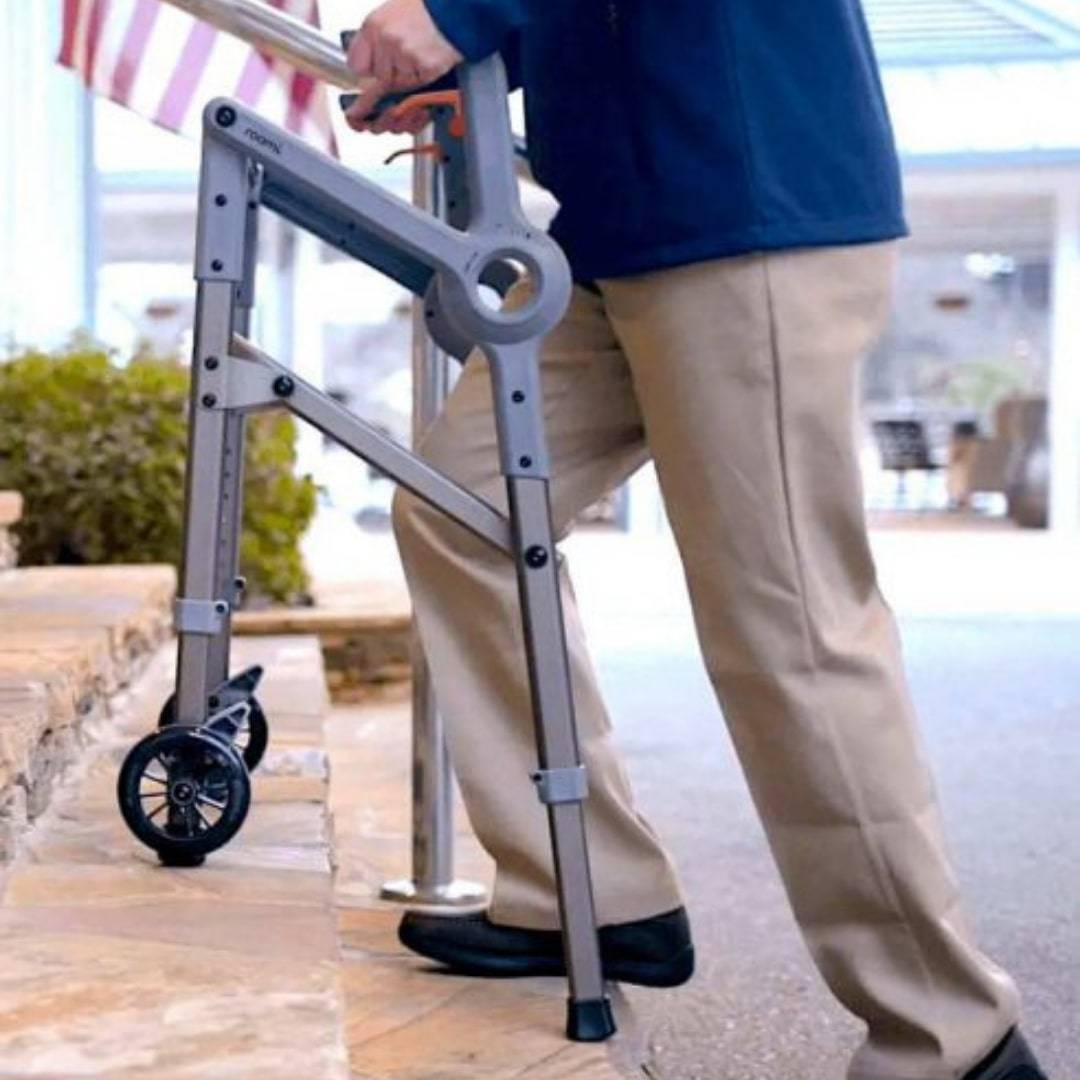
Recommended Stair Climber Rollator: Roami Rollator and Stair Climber
Three-wheeled walkers
Lightweight 3-wheeled walkers offer a wide range of benefits compared to the traditional 4-wheeled walker.
- Enhanced Manoeuvrability: One of the primary advantages of lightweight 3-wheeled walkers is their exceptional manoeuvrability. The 3-wheeled design offers a tighter turning radius compared to traditional 4-wheeled walkers, making it easier for users to navigate through narrow spaces, crowded areas and tight corners.
- Stability: Despite their compact and lightweight construction, 3-wheeled walkers provide excellent stability for individuals with mobility challenges. The triangular configuration of the wheels ensures balanced weight distribution and minimises the risk of tipping.
- Portability: 3-wheeled walkers are the lightest in weight when it comes to the various types of walkers available. Combined with foldable designs, this makes transporting and storing the walker remarkably easy.

3-wheeled walker recommendation: Lightweight 3-wheeled walker
Conclusion
Selecting the right mobility aid can be overwhelming and daunting, however when doing so, it can significantly improve mobility and independence for individuals with mobility difficulties. When considering such factors, such as the individual’s function, mobility goals, environment, comfort and durability, informed choices to suit you or your loved one’s requirements.
About Bettercaremarket
Bettercaremarket is your leading supplier of healthcare essentials and your #1 destination for quality incontinence supplies, mobility equipment, independent living aids for seniors, disability aids, rehab and therapy products and medical supplies.
We help NDIS-participants, aged care facilities, home care package providers, occupational therapists and allied health providers find the best solutions to solve their need.