Parkinson's disease is a complex neurological condition, affecting over 100,000 Australians. It's marked by symptoms such as tremors, stiffness, and difficulties with movement, balance, and coordination, transforming daily activities into challenging tasks.
Fortunately, numerous assistive devices are available to ease these burdens and enhance the quality of life for those impacted by the disease.
This guide aims to shine a light on some of the most effective living aids for individuals with Parkinson's, from mobility aids to handy kitchen and bathroom tools.
What is Parkinson’s Disease?
Parkinson's Disease is a disorder of the nervous system that remains largely mysterious to medical experts.
It arises when a part of the brain - critical for the production of dopamine - that regulates smooth muscle movements, sustains nerve damage.
The disease manifests through motor symptoms like light, steady tremors that typically begin in one part of the body and gradually spread. Other motor symptoms include bradykinesia (slowed movements) and postural instability, which makes it difficult for affected individuals to maintain balance.

Non-motor symptoms vary widely among individuals, and can include difficulty speaking, loss of smell, visual disturbances, anxiety, fatigue, muscle pain, cognitive challenges, excessive sweating, difficulty swallowing, sleep disturbances, and urinary complications.
While there's no cure for Parkinson’s, the symptoms can be managed with the help of assistive living aids, improving daily life considerably.
Mobility Aids
There are many important mobility aids that will help simplify the daily life for those living with PD. Choosing the right mobility equipment is crucial.
- Walking Cane: the Comfort-Plus Quad Cane by Airgo is ideal for PD patients. The walking aid features a shaft with a base with 4 legs for increased stability. This cane is suitable for either hand.
The cane's swan neck shape allows for the user's weight to be carried directly above the stick's shaft for excellent support.

- Walking frame: there are three different types of walking frames;
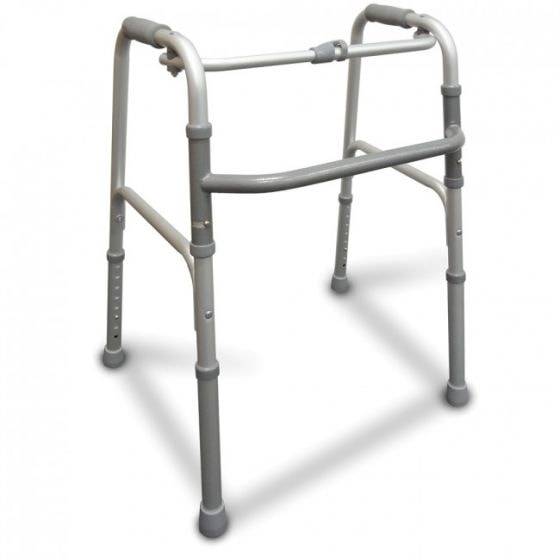
1. non - wheeled walking frames are a type of walking aid that is lightweight and robust and offers stability and support whilst walking. The replaceable rubber feet ensure the longevity of the product. These key features define the non-wheeled walker:
- Lightweight Zimmer frame
- Suited to average-sized users
- Height adjustable legs
- Ergonomic handgrips for added comfort
These walking frames are the most stable frames from the three models.
2. folding walking frames are an easy-to-use option for those wanting to put their walking frames away if they don’t need them. Or use them to take with you in the boot of the car. It folds with simple mechanisms.
These frames are defined by their key features;
- Folding Zimmer Frame
- Lightweight device
- Comfortable handgrip
- Compact for transport and storage
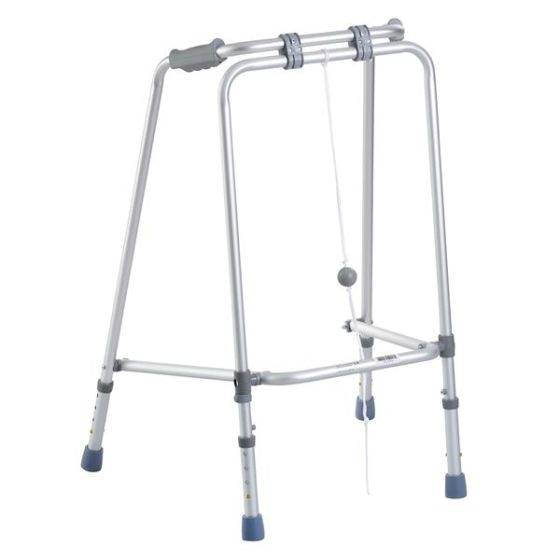
Our Folding Walking Frame with Pull Ball by Days does not have clasps, catches, buttons or complicated systems to fold it. Just pull the ball towards you and the frames pivots and folds.
3. wheeled walking frames provide the ultimate assistance with manoeuvrability. Making use of wheels and skis will have the users enjoy these walking aids without needing to lift their support. The skis (also called glides) help to minimise tripping hazards. The Walking Frame with wheels and skis by BetterLiving will help push the frame easily.
For detailed information on walkers, we have a separate blog 'Choosing the right walker for Parkinson's Disease'.
Handy devices for the bedroom
If you are experiencing difficulty getting in and out of bed, here are some devices that may be worth investing in.
1. Smooth satin fitted sheets help to simplify sliding and turning the body in bed. It is these simple movements we tend to forget about until we are no longer able to perform them. The shiny satin material provides a slippery panel for this purpose. Our secure fitted Wonder Sheets have a Satin panel (where your hips rest) and the two other parts are made from polycotton fabric for extra grip. The Wonder Sheets will make moving in bed a breeze!
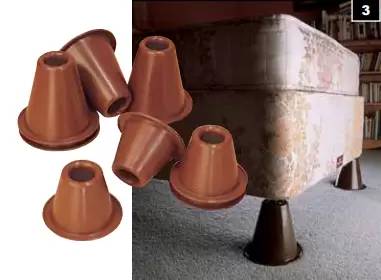
2. A bed raiser is used to heighten the whole bed making it more accessible. It will help you get in and out of bed with more ease as it reduces the strain of bending to stand or sit. Our stackable Cone Bed Risers from Homecraft is a bed heightener that will help you adjust the height of your bed with any height you need! They are available in 14 cm. No need to purchase a new bed!
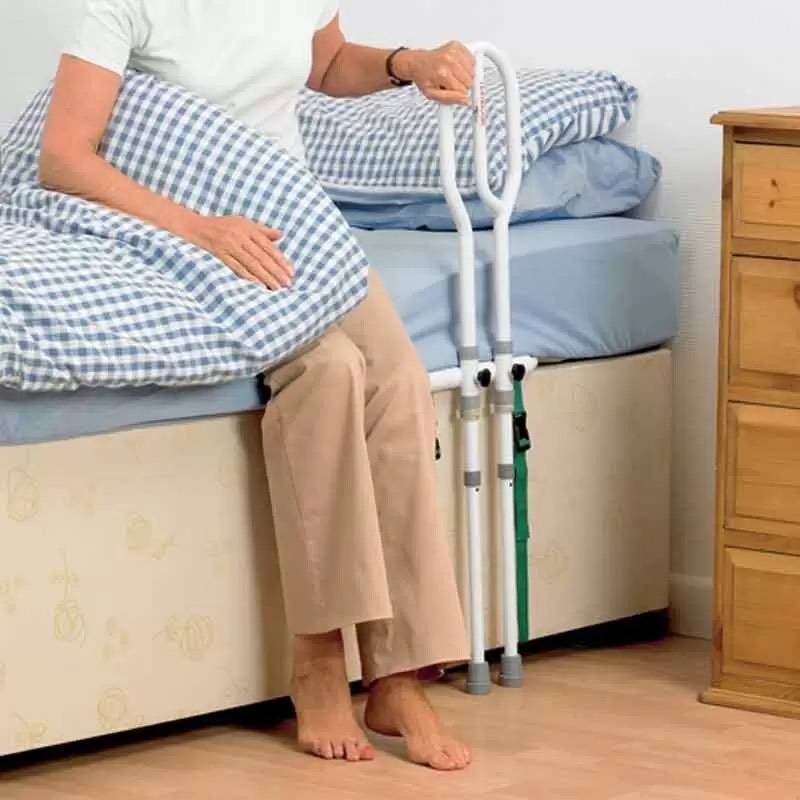
3. A Bed Pole Handrail is an adjustable grab rail featuring standing legs and a handle. You can customised the handle's height to the most comfortable position for you. Our bed rail has a sturdy structure and can effectively provide support for anyone with mobility issues. Perfect for Parkinson's patients!
Handy daily living aids for the bathroom
Navigating the bathroom can be difficult for those with PD. Bathroom aids can help make bathing, showering and toileting safer and more secure those who suffer from Parkinson's disease, giving them more independence and privacy for longer.
These assistive devices minimise the risk of falling or injuries and reduce the stress levels surrounding toileting, bathing, and showering.
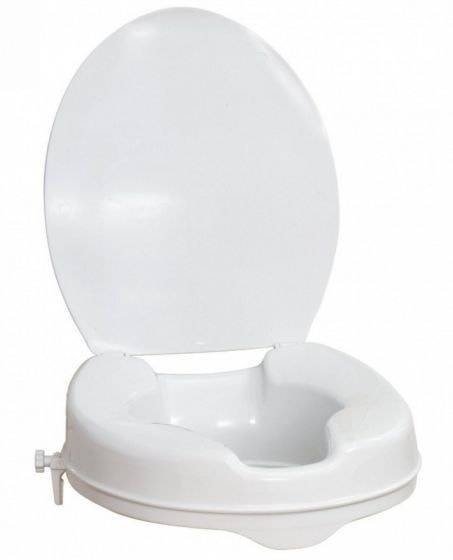
- Raised toilet Seat: raised toilet seat with lid
This toilet seat raiser helps the user with sitting and standing up from the toilet by adding height to the toilet. You have the choice of adding 5cm, 10 cm or 15cm to your toilet seat.
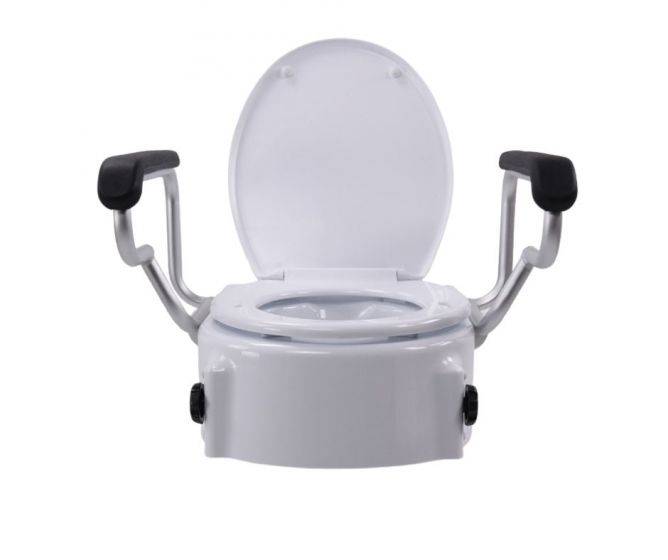
This raised toilet seat comes with two armrests that you can flip-up. This seat will give you optimum stability and comfort when using the toilet.
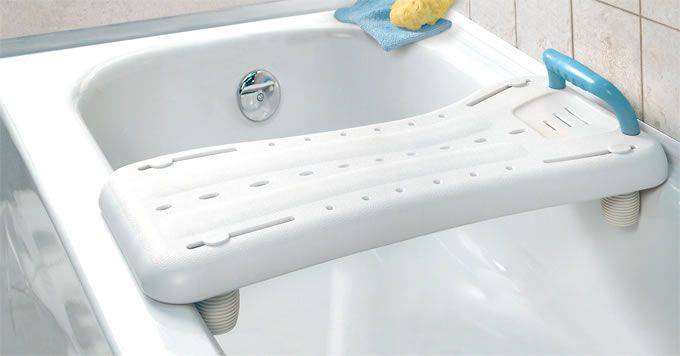
This bath transfer board offers an ergonomic design and enables you to get in and out of the tub with ease and confidence. It’s designed to work with your body, giving you added security.
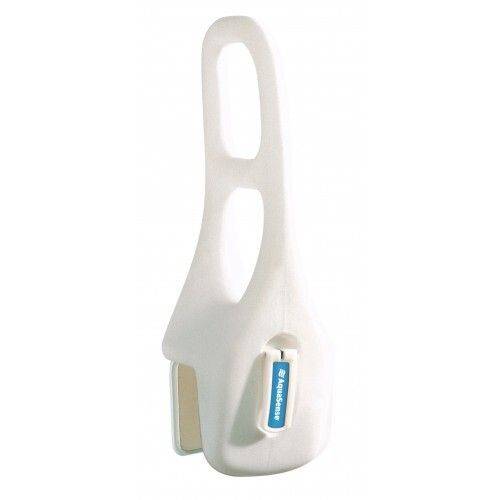
- Bath Safety Rail- Aquasense:
The Bath safety Rail by Aquasense is a handle that clamps on the bathtub, giving you a safe and secure anchor point to hold onto when getting in and out the bath. It minimises the risk of slipping and falling. Forget about hiring someone to install it: this bath rail is tool-free and really easy to set up.
- Grab Rails
Grab rails can offer much-needed support and stability. There are several models of safety grab rails to choose from: fixed or removable; shorter and longer. Our Portable Telescoping Grab Bar by Bridge Medical is considered one of the most convenient safety grab rails you can purchase as it offers an extendable handle specifically designed for 10 x 10 cm tiles. It allows you to shorten or lengthen the bar to adjust it to your bathroom needs. The suction cups offer the most reliable hold on the market today.
Kitchen tools that make eating and drinking easier
For those whose movements are affected by PD, eating and drinking have gone from being a pleasant experience to a dreaded one. There is a variety of assistive devices on the market to make eating and drinking more enjoyable.
Specially designed cutlery:
- The Stabilising Spoon by Elispoon reduces the unsteadiness that comes with PD and other conditions, like strokes and general instability and limited movement. It is designed with a mechanical system - opposed to electrical - using a counterweight resulting in the bowl of the spoon remaining horizontal at all times, whatever movement you make with the wrist. It comes in a teaspoon and a tablespoon size. Regain your confidence and control while eating with this innovative cutlery!
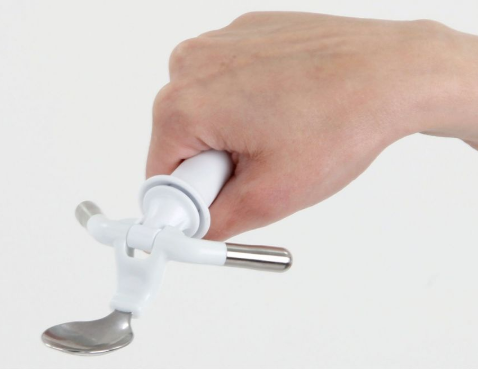
Watch how convenient the Elispoon is for you
- Sure-Grip Bendable Cutlery is a special adaptive eating device consisting of a fork, tablespoon, teaspoon and knife. Being bendable in any angle provides more adaptability to each individual and helps those who suffer from tremors to eat with stability and comfort. This set comes with the following features:
- No need to lift the elbow, it curves the food towards your mouth
- Wide easy-grip handle
- Made of stainless steel and textured grip
- Comfortable in the hand
- For right or left hand
Special crockery
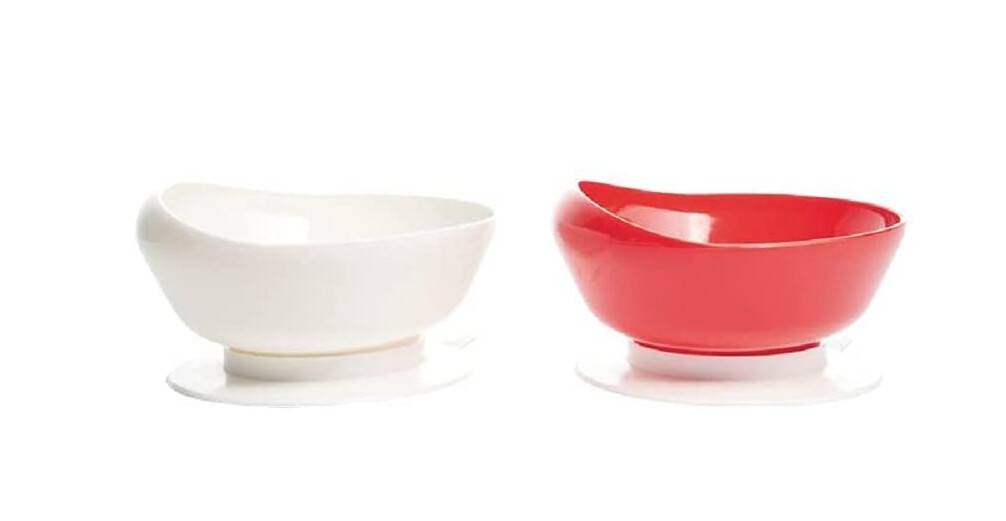
- Scoop Bowl from Aidapt
This handy scoop bowl is break-proof and designed with a higher side to ‘trap’ the food and scoop it onto the fork or spoon. The lower side gives easier access than regular bowls. This assistive eating device enables you to eat with less movement from the supporting arm. The colour red makes it very easy to see.
Helpful kitchen aids
When PD progresses, it can be challenging to prepare your favourite meals due to tremors, rigidity and coordination. Fortunately, there are several tools and living aids that will make cooking much easier. Here are some suggestions.
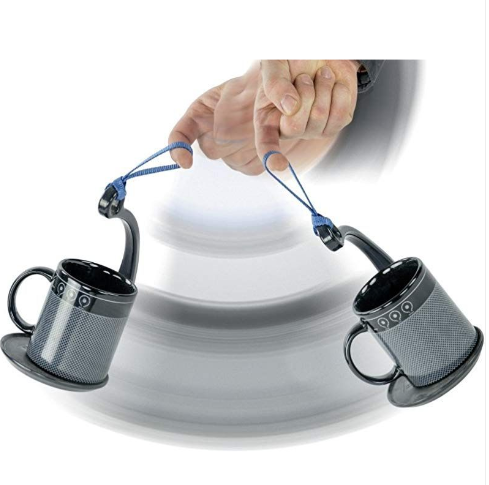
- Spillnot
The Spillnot is a unique stabilising cup holder used to carry cups and glasses holding a beverage. Whatever movement you make with the Spillnot, the beverage will hold still. This effective gadget is very useful for those who have tremors and unsteadiness but want to transport a cup of tea or coffee from the kitchen to their chosen place to sit without spilling.
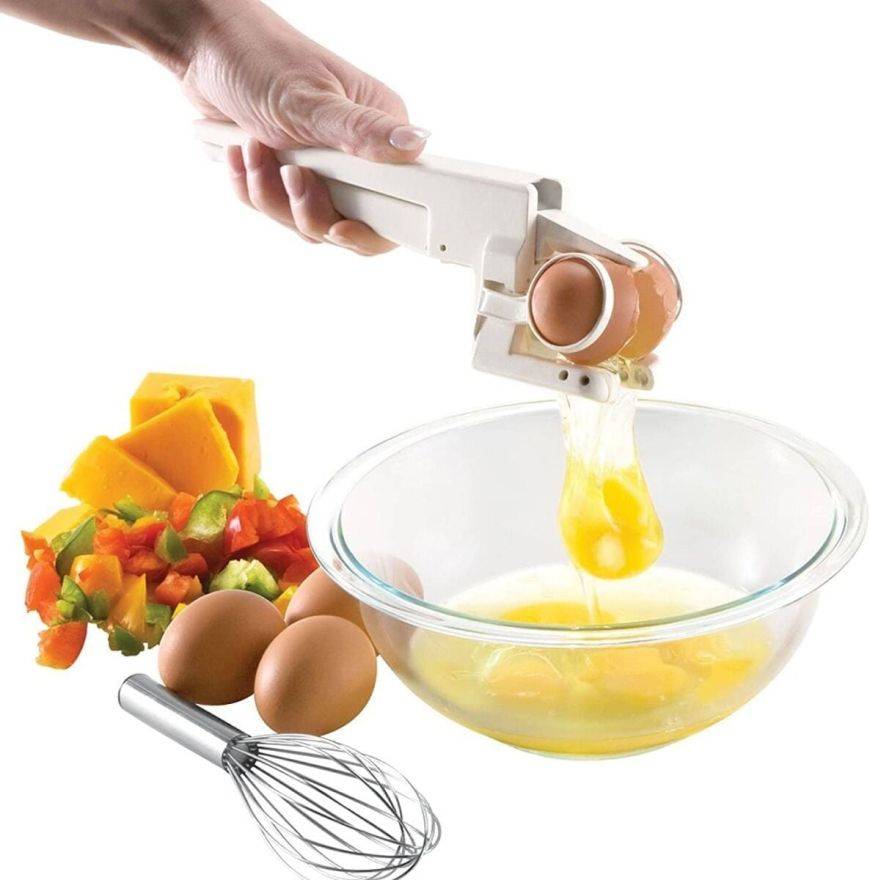
- Egg Cracker – Ezcracker
Cracking an egg is one of these tasks that become more challenging with a tremor. Our Egg Cracker by Ezcracker is a great help! Just insert the egg in the cradle, squeeze and pour the egg out. All this without dropping the shell!
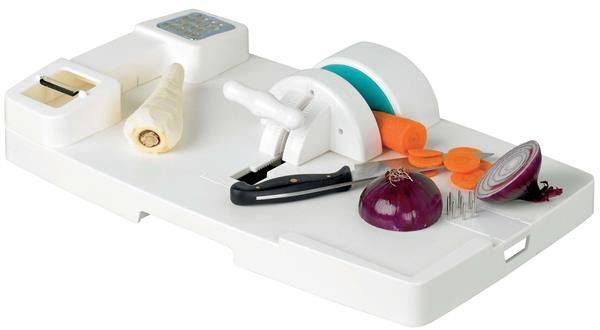
- Food Workstation - Homecraft
Another essential kitchen aid that can come in handy for people PD patients is the Food Workstation. The board makes grating, cutting, whisking, chopping, and peeling much easier.
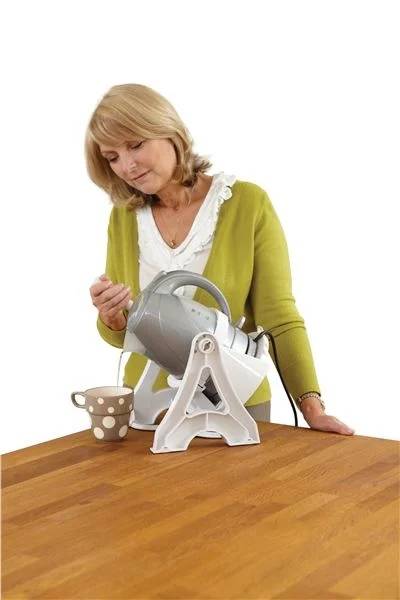
- Jug Kettle Tipper - Homecraft
This kettle tipper helps hold your jug or kettle in place in a cradle, so you can gently tip it to pour hot water without having to lift the jug or kettle.
Helpful aids to manage your medication
Memory loss is an aspect of PD that comes with its own challenges. It can be very difficult to remember to do basic things, like taking your daily pills. That’s why pill organisers are so useful and necessary. Pill cutters and punchers will assist you as well with cutting and pressing the pills out of the packaging.
Dementia clock and reminder: this special clock not only serves as a clock but also shows you when you should take your medication.
-
Pill organisers:
The Large weekly Pill Dispenser from Aidapt helps you take the right medication at the right time of day. This pill organiser has clearly marked letters on each compartment for each day of the week. They have lids which can keep the pills safe from moisture until they are needed.
-
Pill cutters:
This 3-in-1 Pill Crusher and Cutter with storage from Aidapt makes it easier to swallow pills by crushing or cutting them and neatly dispensing them. You can also store pills safely in this storage container.
-
Pill Punchers:
The Pill Puncher from Aidapt is designed to assist with the dispensing of daily medication. It can handle a variety of different pill shapes and sizes. It helps those with limited grip and mobility in their hands, to safely remove pills from blister packs. It is lightweight, easy to use, and convenient to carry on you.
Conclusion
In conclusion, living with Parkinson's is challenging, but there are many helpful aids available that can improve quality of life. From assistive devices to mobility aids and technology, these resources have the potential to make a real difference in the lives of those affected by Parkinson's.
By exploring the many useful living aids available, we hope to have given you a better understanding of the supports that are out there and the many ways in which it can be used to improve the lives of those with Parkinson's.
Need help or advice
Would you like more information on Parkinson’s Disease? Contact Parkinson’s Australia. Or you can call the National Helpline for Parkinson's on 1800 644 189 for all the necessary advice on Parkinson's Disease.